
Your situation7-minute readFor medtechs taking their first Gulf licence exam
First time Prometric exam for medtechs: an order of moves, from authority to test day
A first time Prometric exam guide for medtechs: choose your authority and title, read the official guide, clear eligibility, then practise on the clock.
If this is your first time Prometric exam, the biggest risk is not a hard question. It is spending weeks studying for the wrong paper. Medical technologists who have only sat the Philippine board exam often expect one Gulf exam with one syllabus, and that is not how it works.
This guide gives you the order of moves, from picking an authority to your first month of practice. It is written for a Filipino medtech who has not yet booked anything, and it keeps each authority's rules separate because they are different.
What do you underestimate on a first time Prometric exam?
First-timers underestimate how different the authorities are and how long the paperwork takes. Prometric delivers the computer-based test for some authorities, but the exam itself belongs to the health authority that licenses you.
The published figures show how far apart the papers are. SCFHS publishes its Laboratory Technician exam as 150 MCQs in 3 hours with a 55% passing score, while its specialist exam (the SLLE) has 200 items in two 120-minute parts and a pass score of 530 on a 200–800 scale. DHA and Qatar's DHP each publish 150 questions in 3 hours with a 50% pass mark. Those figures are as published and can change.
Three habits cause most early mistakes:
- Studying from a generic "Prometric" reviewer before you know your authority and title.
- Never opening the authority's own guide.
- Treating attempts as unlimited.
The table below turns each trap into a better move.
| Trap | Better move |
|---|---|
| Buying a reviewer before choosing an authority | Choose the authority and title first, then check which blueprint any material teaches to |
| Relying on summaries of the exam format | Read the authority's own guide, which is free and current |
| Assuming a pass mark applies everywhere | Write down your authority's own figure and ignore the others |
| Starting practice only after the syllabus is "done" | Take a short timed set in the first fortnight to see your pace |
| Booking before the file is ready | Clear the eligibility step first; some authorities do not let you book until it clears |
| Treating the first attempt as a trial run | Prepare as if it is one of a limited number, because at some authorities it is |
How do you choose the authority?
Choose the authority by where the job is, not by which exam looks easiest. No authority we found publishes pass rates, so any claim about an "easy" exam has no source behind it. A lower pass mark is not an easier paper either.
Ask three practical questions. Where is the post you are applying for? Which authority licenses that employer's laboratory staff? What does that authority say about eligibility for your title? If you are still deciding, our authority-by-authority comparison sets the verified details side by side and marks the authorities where nothing could be confirmed.
For Abu Dhabi, the sole document we found is a 2012 standard, so confirm current rules with DOH. For MOHAP, OMSB and Kuwait's Ministry of Health, we found nothing verified: check with the authority directly. Bahrain's NHRA says you apply online for the licence first and receive an eligibility code to register with Prometric, as its Licensure Exams page explains.
How do you pin down your title?
Your title decides which paper you sit. Qatar's DHP, for example, lists a Laboratory Technician and a Laboratory Technologist (Biomedical) with different education lines, and DHA runs separate Technician and Technologist papers with different coverage.
According to DHP's Laboratory Scopes, a Laboratory Technician needs a minimum 2-year Diploma in Biomedical Sciences plus two years' clinical laboratory experience. A Laboratory Technologist (Biomedical) needs a BSc in Biomedical Sciences or a 3-year diploma, and overseas candidates need two years' clinical laboratory experience. We cannot tell you how DHP maps a Philippine BS Medical Technology degree, so confirm it with DHP before you assume anything.
Do not classify yourself from forum posts. Ask the authority which title your degree and experience fit, and read our guide to technician, technologist and specialist titles for the questions to put to them.
Why read the official guide first?
Read the official guide first because it is the one document that describes your exam, and it costs nothing. Everything else is a secondary account of it.
For SCFHS, the technician blueprint lists Microbiology, Clinical Chemistry, Hematology and Blood Bank at 20% each, Immunology/Serology at 15% and Histo/Cyto-Techniques at 5%, with weights that "may differ up to +/-5%". DHA's guideline lists topic areas without weights, and it states that DHA may change the content, format or pass mark without updating the document. DHP's page gives the format and the attempt rule.
Use the guide to build a one-page summary: items, minutes, pass mark, disciplines, and the rules for attempts. Then check each study resource against that page. Our study plan shows how to turn the weights into weekly hours. The in-app application guide also covers the application side.
What does your first month of practice look like?
Your first month should alternate coverage with short timed sets, so you learn your pace early. Most first-timers have only met long board-style papers, and a 150-item paper in 3 hours leaves 72 seconds an item.
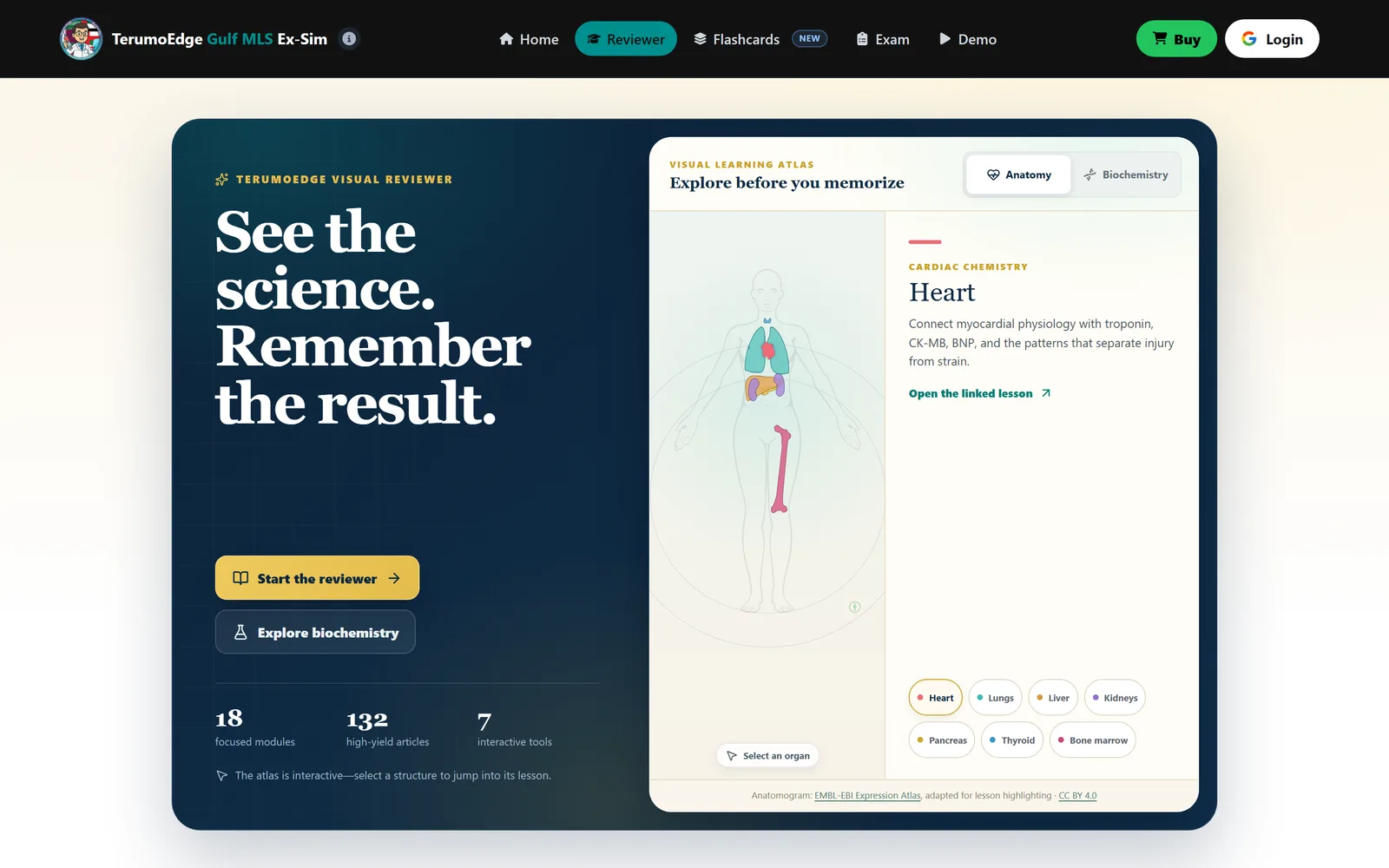
In week one, take a baseline: a short timed set in each discipline from the simulator's discipline practice, which has four fixed sets of 100 items per discipline. Note your score by discipline, and your time per item. In weeks two to four, spend most of your time on the two or three weakest disciplines, weighted by your blueprint, and finish each week with a mixed timed set.
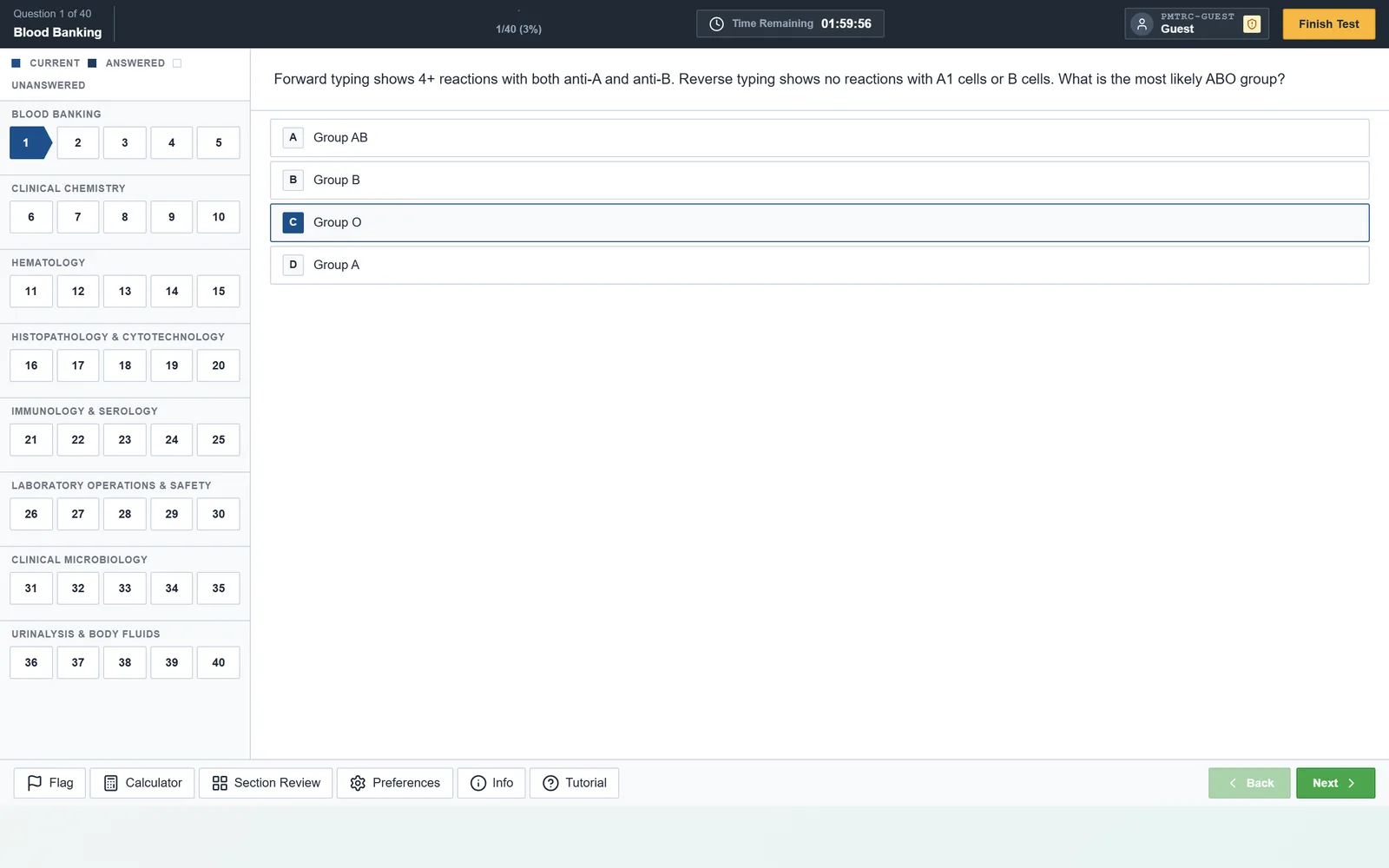
The simulator's 100-item mock is one blend of the disciplines, not any authority's paper, so read results by discipline. Set its clock to 120 minutes to train 72 seconds an item. You can try the format in the free demo, which has 40 items and is not scored.
Which habits protect a first attempt?
Four habits protect a first attempt: keep an error log, review every explanation, rehearse the clock, and sort the paperwork early. None needs special tools.
Keep a running list of every item you missed and why: knowledge gap, misread stem, unit error or time pressure. After two weeks the list shows patterns you cannot see item by item. Read the explanation for every item you miss and for those you guessed correctly, since a lucky guess teaches nothing.
Rehearse the clock with at least two full-length timed papers before your date. Remember that DHA's 3 hours include registration and the process introduction, so the answering time is shorter. On paperwork, DHA asks for a Sheryan account, a DHA Unique ID and an Eligibility ID before you book at prometric.com/DHA, and the passport name must match the Sheryan name. Read our retake guide before you book, so you know the attempt rules in advance.
Frequently asked questions
Which Gulf exam should I take first?
Take the one for the authority where the job is. No source ranks the exams, and we found no pass-rate data for any authority. Compare the verified rows in our authority comparison, confirm your title with the authority, and apply there.
How hard is the Prometric exam for medtechs?
We cannot say how hard it is in comparison, because no authority we found publishes pass rates. What the sources do give is the format: for example, 150 questions in 3 hours at DHA and DHP, or 150 MCQs with a 55% pass mark for the SCFHS technician paper. Difficulty depends on your preparation.
Do I need work experience before the exam?
It depends on the authority and title. Qatar's DHP lists two years' clinical laboratory experience for the Technician title and for overseas Technologist (Biomedical) candidates. For other authorities, the sources we use do not say, so check with the authority.
Is the Prometric exam the same in every country?
No. Prometric delivers the test for DHA, Qatar DHP and Bahrain's NHRA, but each authority sets its own content, length and pass mark. For SCFHS, the test provider is the one SCFHS assigns. Treat each authority's guide as the only guide for that exam.
Sources
- Laboratory Technician Blueprint, Saudi Licensing Examinations — SCFHS
- Healthcare Professional Licensing Assessment Guideline, Computer Based Testing — Dubai Health Authority
- Manual for Professional Assessment (Oral/CBT) — Dubai Health Authority
- Qualifying Examination — Department of Healthcare Professions, Qatar
- Laboratory Scopes — Department of Healthcare Professions, Qatar
- Licensure Exams — National Health Regulatory Authority, Bahrain
From the publisher
Practise the lab disciplines first.
TerumoEdge Gulf MLS is a practice simulator for the Gulf laboratory licensing exams: timed sessions in eight lab disciplines, an adjustable clock, and a full explanation for every item instead of a bare answer key.
- 4,000 items, 500 in each of eight lab disciplines
- A 100-item blended mock, reshuffled each attempt
- A full English explanation for every item, with the reason each wrong option is wrong
- A lab science reviewer and flashcards beside the question bank
Try the free Gulf MLS simulator demo Forty items across all eight lab disciplines. No account needed.
About this article
Written by the TerumoEdge editorial team, who build the TerumoEdge Gulf MLS Ex-Sim. Exam facts are checked against the published documents of SCFHS, the Dubai Health Authority, Qatar's Department of Healthcare Professions and NHRA Bahrain, and every article lists its sources. How we write and check our articles.
First published .