
Guides7-minute readFor Filipino medtechs preparing for a Gulf licence exam
What a Gulf Prometric MLS simulator is, and how to use one when every authority sets its own exam
A Gulf Prometric MLS simulator rehearses the clock, the format and every lab discipline. See what it trains, what TerumoEdge includes, and how to set it up.
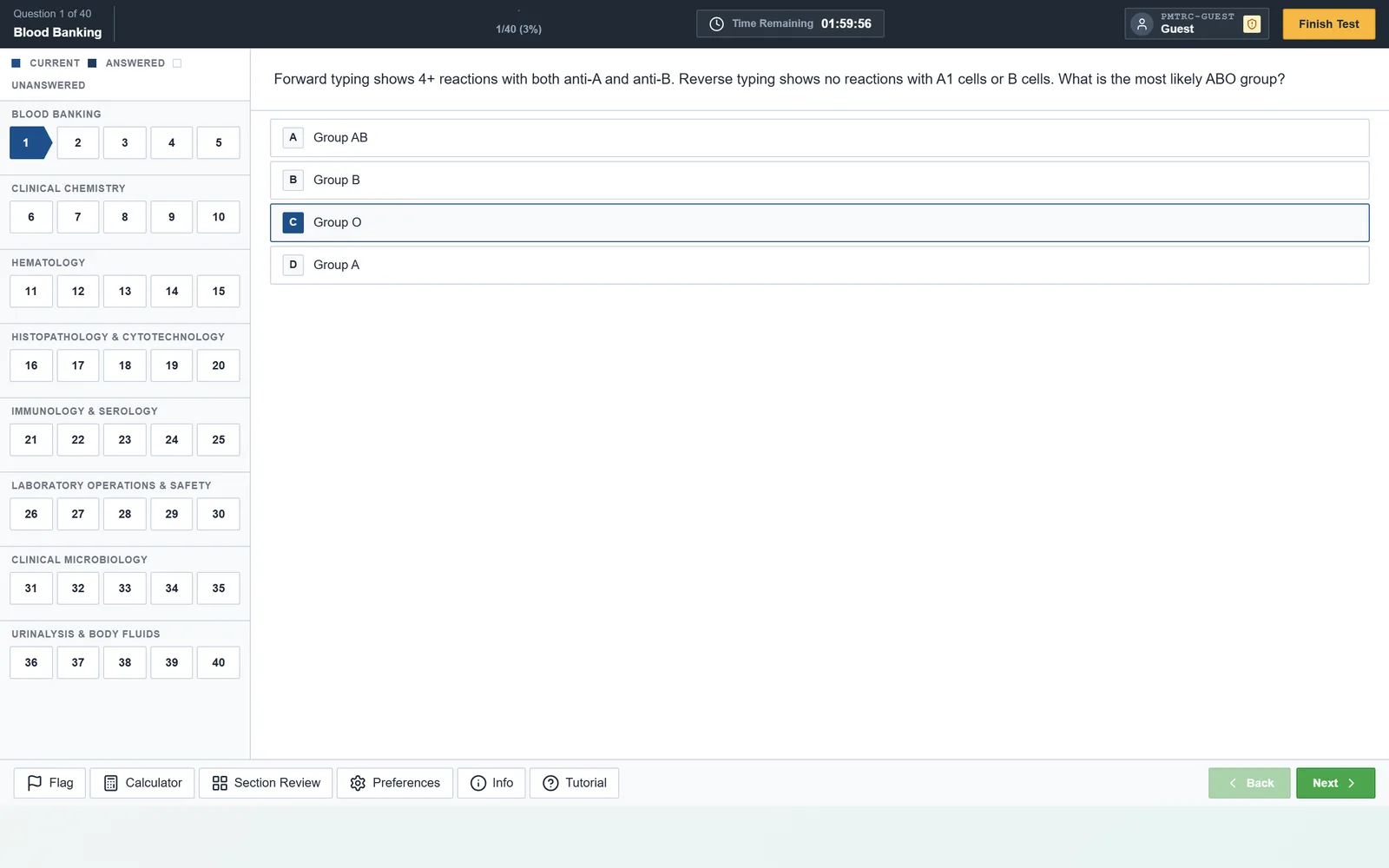
You are a Filipino medical technologist weighing a Gulf licence, and someone has told you to "just take the Prometric exam". A Gulf Prometric MLS simulator is the practice tool for that moment: a timed, exam-style session that lets you rehearse before the real seat. This guide explains what such a simulator trains, what it cannot do, and how to set TerumoEdge's version for your own authority.
We publish this blog and we make the TerumoEdge Gulf MLS Ex-Sim, so weigh our opinions accordingly. Where we describe the product, we say how you can check it yourself in the free demo.
What is a Gulf Prometric MLS simulator?
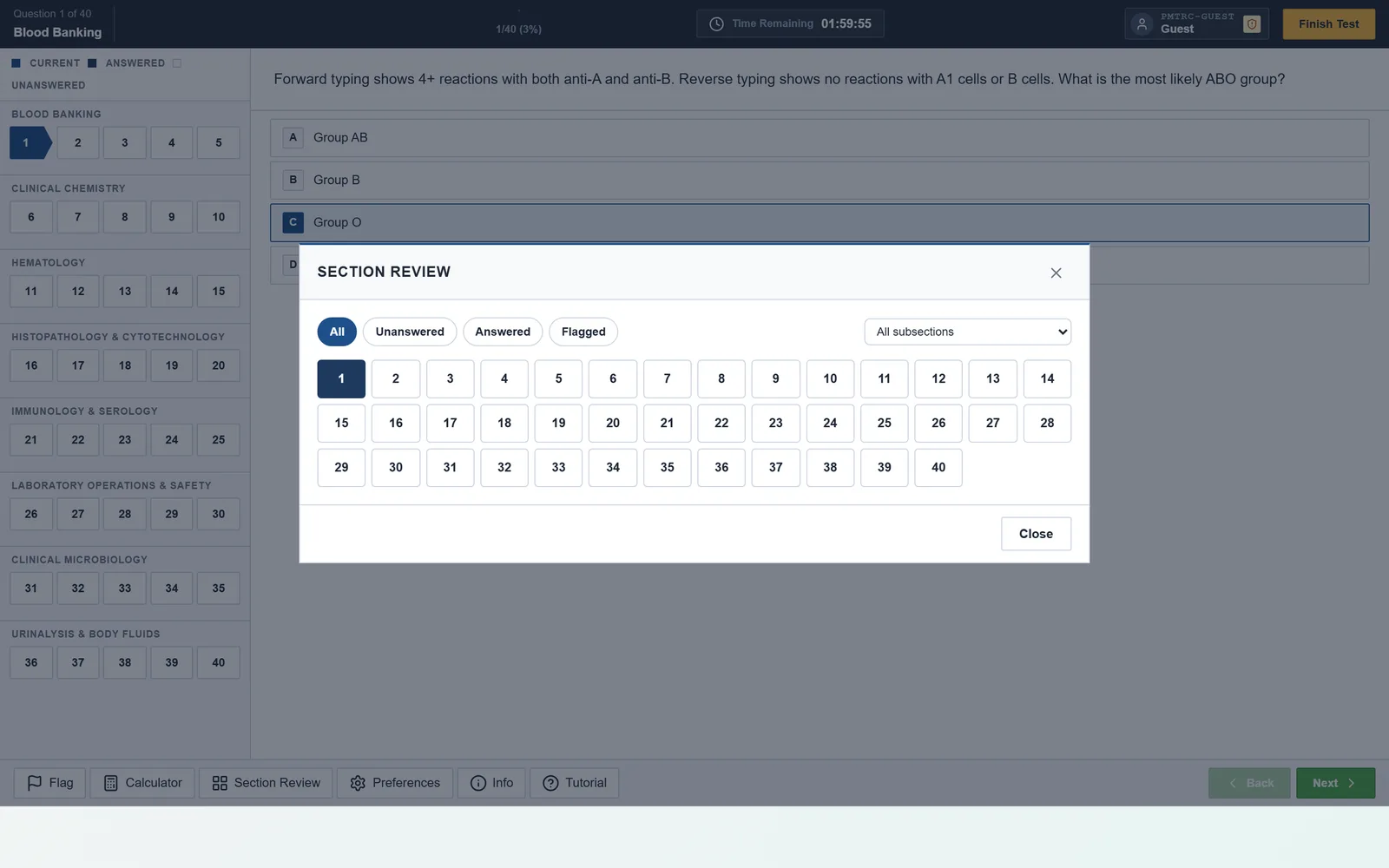
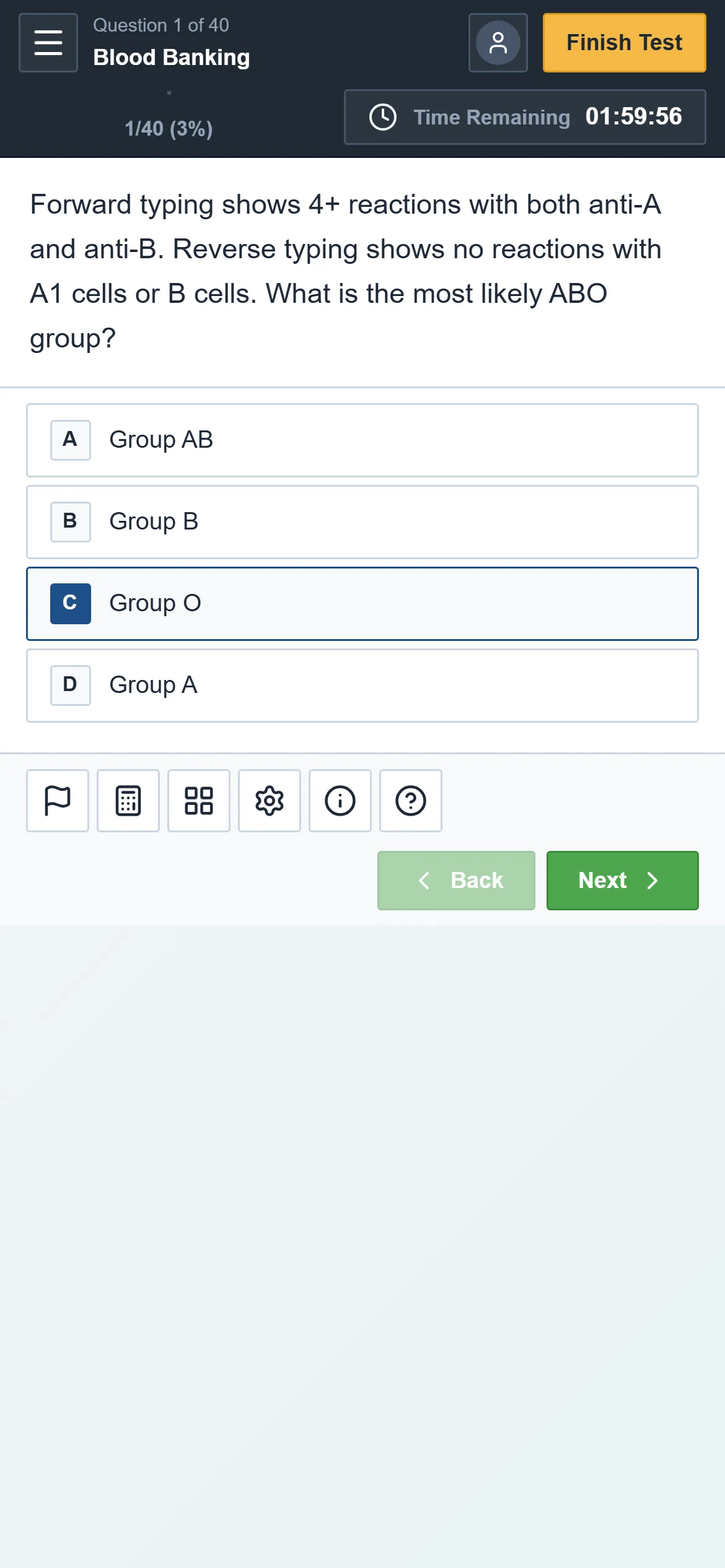
A Gulf Prometric MLS simulator is a practice exam that imitates the shape of a computer-based laboratory licensing test: single-best-answer multiple choice, a running clock, a question navigator and the ability to flag items and review them. It does not contain the real questions. It gives you repetition under realistic conditions, so the format stops costing you attention on exam day.
The SCFHS specialist guide describes the format plainly: four options, one best answer (SCFHS SLLE content guideline). A good simulator uses that format for every item. It also lets you work by discipline when you want to repair a weak area, and by full mock when you want to test stamina.
What a simulator is not: a guarantee, a prediction of your score, or a stand-in for your authority's published guide. Nobody can promise a pass, and the authorities do not publish pass rates that would let anyone estimate one.
Why is "the Prometric exam" really several exams?
Prometric delivers computer-based tests for several Gulf authorities, but each authority writes its own exam. Their published figures differ, and you should never blend them into one "Prometric passing score".
| Authority and exam | Items | Time | Pass mark as published |
|---|---|---|---|
| SCFHS Laboratory Technician | 150 MCQs | 3 hours | 55% |
| SCFHS Laboratory Specialist (SLLE) | 200 MCQs, up to 10% pilot items | Two 120-minute parts, 30-minute break | 530 on a 200 to 800 scale |
| DHA Medical Laboratory Technician and Technologist | 150 questions | 3 hours, including registration | 50% |
| Qatar DHP Laboratory Technician and Technologist | 150 MCQs | 3 hours | 50% cut score |
Sources: SCFHS technician blueprint, SCFHS SLLE guideline, DHA CBT guideline and DHP qualifying examination page. All figures are as published in those documents, and each authority says they can change.
The 530 for the SLLE is a scaled score. Do not turn it into a percentage. For the full authority-by-authority view, including the ones where we found nothing verified, read Gulf lab licensing exams compared.
What should a simulator rehearse?
A simulator should rehearse four things: the clock, the format, the coverage and the feedback loop. Each one fails differently when you skip it.
The clock matters because 150 items in 3 hours leaves 72 seconds an item, and DHA's three hours include registration and the process introduction. The format matters because single-best-answer items punish half-knowledge: two options often look right, and only practice teaches you to choose the better one. Coverage matters because the exams span many disciplines, from blood bank and chemistry to microbiology, urinalysis and laboratory operations.
Stamina is the fifth, quieter reason. Three hours at a screen is a different job from an hour of study at home, and the fourth hour of any long session is where attention thins. A few full mocks teach your body that length before the real day does.
Feedback is the part people undervalue. A bare answer key tells you that you were wrong. An explanation tells you why, and why each distractor fails, which is what turns a missed item into a point you will not miss twice.
How does a simulator differ from a reviewer or a review center?
They train different things, and most medtechs need more than one. A reviewer builds knowledge, a review center adds structure and a cohort, and a simulator tests whether you can retrieve and apply that knowledge under time pressure.
| Tool | What it trains | What it does not train |
|---|---|---|
| Reviewer (notes, PDFs, a lab-science reviewer) | Coverage and recall of facts | Pace, format, decision-making between close options |
| Review center | Schedule, lectures, a cohort | Individual pacing; fit to your authority's blueprint varies |
| Simulator | Clock, format, stamina, explanation-led repair | Teaching a topic from nothing |
| Flashcards | Short-gap recall of facts and definitions | Multi-step reasoning in long stems |
If you are choosing between routes, prometric review center or self review goes through the trade-offs, and PDF reviewers, recall lists or a simulator compares the tools directly.
What does TerumoEdge include, and what does it not?
TerumoEdge Gulf MLS Ex-Sim has 4,000 items across eight lab disciplines, 500 in each: Blood Banking, Clinical Chemistry, Hematology, Clinical Microbiology, Immunology and Serology, Urinalysis and Body Fluids, Histopathology and Cytotechnology, and Laboratory Operations and Safety. Every item has four options and an English explanation that names the correct answer, gives the rationale, says why each other option is wrong and carries reference citations.
- Full Mock: one 100-item mock, reshuffled on every attempt. It draws 18 items each from Blood Banking, Clinical Chemistry, Hematology and Clinical Microbiology, and 7 each from the other four.
- Discipline practice: for each discipline, four fixed sets of 100 items, plus a random pool of 100 drawn from all 500.
- An adjustable clock on every session.
- A lab-science reviewer of 18 modules and 132 articles at /learn/, and 1,000 flashcards in 25 decks.
What it does not include: a separate mock for each authority. The blend is our design, not any authority's paper. It also has no recalled or "actual exam" questions, and it makes no pass prediction.
How do you set a simulator up for your authority?
Set the clock first, then the focus. The default session timer is 150 minutes, which matches no authority's paper, so change it.
For a 150-item, 3-hour paper (SCFHS Technician, DHA or Qatar DHP), the pace is 72 seconds an item. Set the 100-item mock to 120 minutes to train that pace. For the SLLE, work in blocks of about 100 items at 120 minutes each, using fixed sets so you can compare attempts. Pacing is covered in Prometric exam time management.
Then shift your focus toward your authority's published weights. The SCFHS technician blueprint gives Microbiology, Clinical Chemistry, Hematology and Blood Bank 20% each, Immunology and Serology 15% and Histo/Cyto 5%, with a stated variation of up to 5% per category. The mock's blend is fixed, so use discipline practice to tilt your hours toward the weights your paper publishes. DHA publishes coverage lists without weights, and for authorities we could not verify, ask the authority.
TerumoEdge also publishes MTLE, ASCPi and AIMS simulators. Those are different exams run by different bodies, and nothing here applies to them.
Frequently asked questions
Is there a free Prometric simulator for medtechs?
Yes, in the sense that TerumoEdge has a free demo of 40 items, five from each of the eight lab disciplines, with no account needed. Submission is disabled, so it is a taste of the exam room and the item format, not a scored mock exam and not a full practice test.
Does it have a separate mock for each authority?
No. TerumoEdge has one blended 100-item mock whose mix is our own design, not any authority's paper. You adapt it by changing the clock to your authority's time and by using discipline practice to match the weights your authority publishes.
Are these the real exam questions?
No. The items are written for practice and are not recalled or leaked questions from any authority's exam. Nobody can responsibly promise you the real items, and a simulator's value is the repetition and the explanations, not a preview of the paper.
What language are the explanations in?
English. Each explanation names the correct answer, explains the rationale, says why each other option is wrong and lists reference citations. The free demo does not show explanations.
Sources
- Laboratory Technician Blueprint (Saudi Licensing Examinations) — SCFHS
- Saudi Laboratory Specialist Licensure Examination (SLLE) Content Guideline — SCFHS
- DHA Healthcare Professional Licensing Assessment Guideline, Computer Based Testing — Dubai Health Authority
- Qualifying Examination — Department of Healthcare Professions, Qatar
From the publisher
Practise the lab disciplines first.
TerumoEdge Gulf MLS is a practice simulator for the Gulf laboratory licensing exams: timed sessions in eight lab disciplines, an adjustable clock, and a full explanation for every item instead of a bare answer key.
- 4,000 items, 500 in each of eight lab disciplines
- A 100-item blended mock, reshuffled each attempt
- A full English explanation for every item, with the reason each wrong option is wrong
- A lab science reviewer and flashcards beside the question bank
Try the free Gulf MLS simulator demo Forty items across all eight lab disciplines. No account needed.
About this article
Written by the TerumoEdge editorial team, who build the TerumoEdge Gulf MLS Ex-Sim. Exam facts are checked against the published documents of SCFHS, the Dubai Health Authority, Qatar's Department of Healthcare Professions and NHRA Bahrain, and every article lists its sources. How we write and check our articles.
First published .