
Study strategy6-minute readFor medtechs who run out of time
Prometric exam time management: 72 seconds an item, and why DHA's clock is tighter
Prometric exam time management for medtechs: the seconds per item for SCFHS, SLLE, DHA and Qatar papers, checkpoints, flagging and how to train the pace.
Prometric exam time management comes down to one number: 72 seconds an item on most of the papers medtechs sit. The number sounds generous until you meet a four-line stem with a calculation, and then sound disappears. This guide works out the pace for each authority, shows why DHA's clock is tighter than it looks, and gives checkpoints you can use on the day.
Every figure is as published in the authority's own document. Formats and pass marks can change, so confirm yours before you rely on any of them.
What does Prometric exam time management look like, authority by authority?
The pace is 72 seconds an item for every 150-item, 3-hour paper in our sources. The arithmetic: 3 hours is 180 minutes, which is 10,800 seconds, and 10,800 divided by 150 is 72.
| Paper | Items | Minutes | Seconds per item |
|---|---|---|---|
| SCFHS Laboratory Technician | 150 | 180 | 72 |
| SCFHS Laboratory (Microbiology) Technician | 150 | 180 | 72 |
| SLLE, per part | 100 (plus or minus 10) | 120 | about 65-80 |
| DHA Medical Laboratory Technician or Technologist | 150 | 180, including registration | 72 before the introduction is deducted |
| Qatar DHP Laboratory Technician or Technologist | 150 | 180 | 72 |
The sources are SCFHS's technician blueprint, its Microbiology Technician guideline, the SLLE guideline, DHA's CBT guideline and Qatar's qualifying exam page.
The SLLE range comes from its part size. At 100 items, 120 minutes is 7,200 seconds, so 72 seconds. At 90 items it is 80 seconds, and at 110 items about 65. The guideline allows 100 (plus or minus 10) per part, and the 200 items may include up to 10% pilot items, so you cannot know your exact count ahead. The SLLE also has a 30-minute break between parts.
Why are DHA's three hours less than three hours?
DHA's 3 hours include registration, the process introduction and the exam content, so the time left for answering is shorter than 180 minutes. The guideline states that the exam duration includes the registration, process introduction and exam content.
DHA does not publish how long those steps take, and we will not guess. Use an illustration instead. If 10 minutes go to registration and the introduction, you have 170 minutes, which is 10,200 seconds for 150 items, or 68 seconds each. Every extra 10 minutes lost costs about 4 seconds an item.
The practical advice is to plan on about 68 seconds and treat 72 as the ceiling. Arrive early (the DHA manual says 30 minutes), settle your nerves before the clock starts, and do not rely on the full 180 minutes. Our exam day guide walks through check-in.
What checkpoints work for a 150-item, 3-hour paper?
Checkpoints every 25 items show you early whether you are on pace. Two columns help: the raw 72-second pace, and a pace that leaves a 15-minute review buffer, which is 165 minutes for 150 items or 66 seconds each.
| Checkpoint (item) | Elapsed at 72 s | Elapsed with a 15-minute buffer (66 s) |
|---|---|---|
| 25 | 30 min | 27.5 min |
| 50 | 60 min | 55 min |
| 75 | 90 min | 82.5 min |
| 100 | 120 min | 110 min |
| 125 | 150 min | 137.5 min |
| 150 | 180 min | 165 min |
Being a few minutes ahead at item 50 is normal, because early items feel quick. Being behind is a signal to speed up, not to panic. Skip the longest stems, make a fast decision on the rest and keep the checkpoint rhythm.
How do you handle calculation and long-stem items?
Give calculation and long-stem items a time cap, because they are where pace collapses. A reasonable cap is about two minutes: if you cannot see the route in the first minute, flag it and move on.
Many calculations are quick if you set up the units first. Converting 180 mg/dL of glucose to mmol/L is a division by about 18, which is 10 mmol/L. An anion gap is sodium minus chloride and bicarbonate. A serial dilution is the starting dilution times the power of two. Practise them until they take seconds, as covered in our clinical chemistry guide.
For long stems, read the question line first, then the stem, then the options. You then read the stem for specific data, not for everything. Four options, one best answer is the format on the SLLE, so eliminate two quickly and decide between the rest.
What happens to pace when nerves and fatigue set in?
Pace drifts in two predictable places. Early on, adrenaline makes you rush, and you finish the first 25 items well ahead of the clock but with careless errors. In the last third, fatigue makes you re-read stems, and each item quietly takes ten seconds longer.
Both are trainable. Rehearse long sessions so the third hour is not new to you. Use a short reset when you notice drift: look away from the screen, breathe out slowly, drop your shoulders and start the next stem fresh. That takes ten seconds and often saves more than it costs.
Note the habit that matters most: do not recalculate your whole remaining time after every item. Check only at the 25-item checkpoints, and otherwise answer. Constant arithmetic is itself a time sink, and the checkpoint table exists so you can stop doing it.
How do you flag, move and return?
Flag, move and return is a way to bank easy marks first. When an item stalls you after about a minute, choose your leading answer, flag it and move on. A stuck item that gets three minutes costs you the time of two or three easier ones.
Do not leave anything blank in the first pass unless the exam's instructions say otherwise; an early guess flagged for review keeps your place. On the return pass, start with the flagged items that need the least time, then the calculations.
In the last 15 minutes, check that every item has an answer selected and do not start a new long calculation. Read the tutorial screens for what the exam says about unanswered items rather than assuming. Rules on breaks vary: the SLLE has a 30-minute break between parts, and our sources state no break for the other papers, so confirm yours.
How do you train the pace?
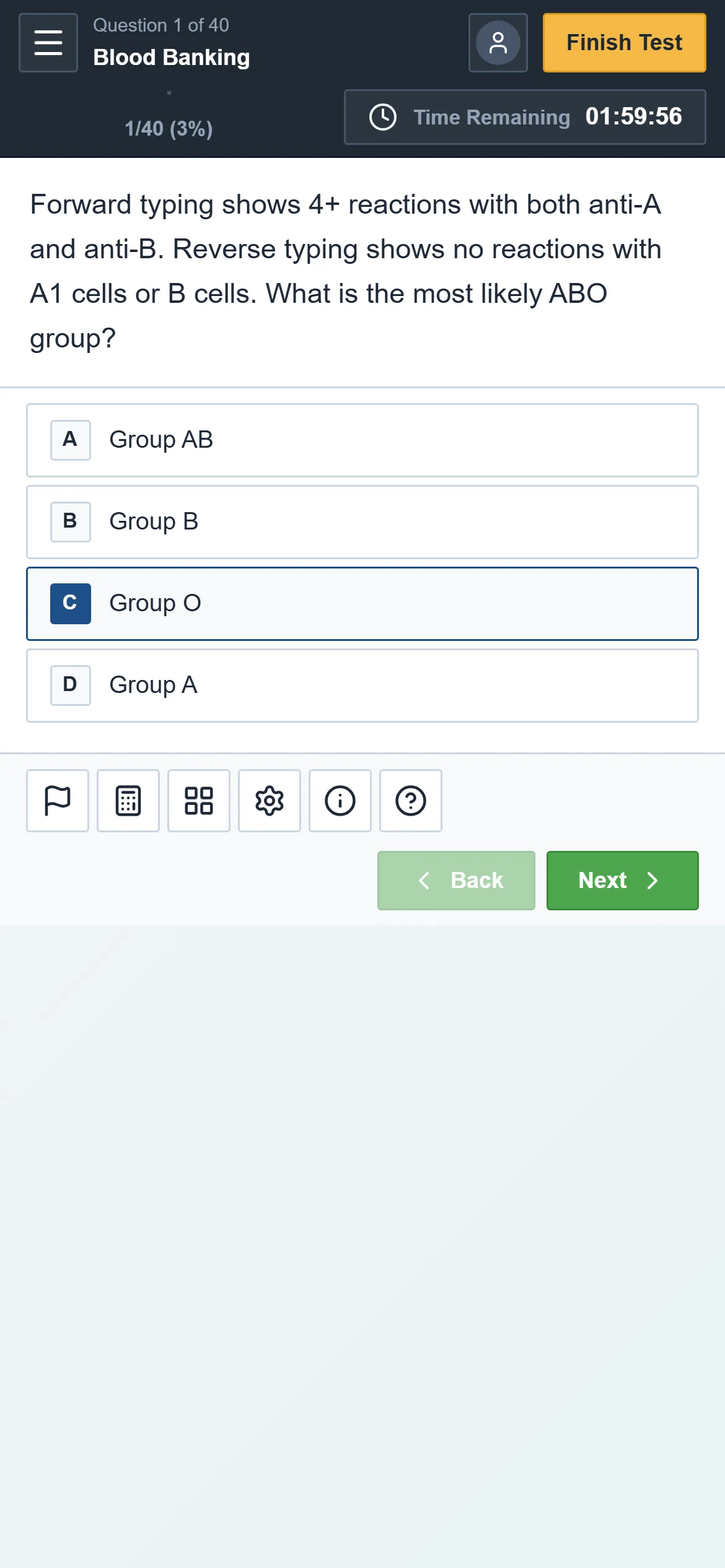
Train the pace on a clock set to the real pace. The product's 100-item mock has an adjustable clock. Setting it to 120 minutes trains 72 seconds an item, the pace of a 150-item, 3-hour paper. The default of 150 minutes is generous, so change it before you practise pace.
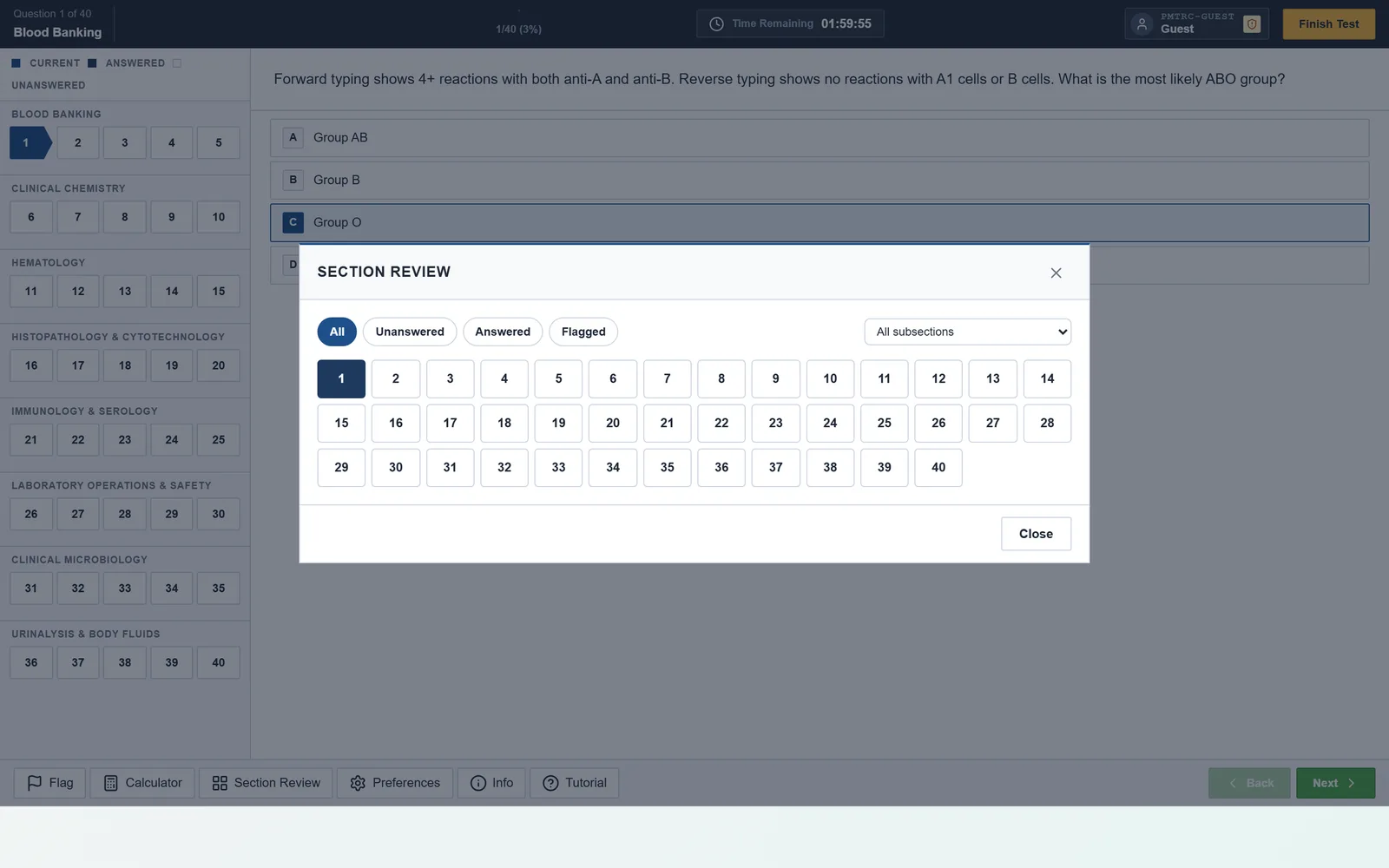
Be clear about what the mock is. It is one blended mock, built by the product, not any authority's paper, and the free demo is 40 items without scoring. Use the Flag and Section Review tools to practise the return pass, and treat them as the product's own tools, not a copy of any exam interface.
Build up in stages. Do untimed sets to learn the content, then 100-item sets at 72 seconds, then the full pace session. Slot these into your study plan.
Frequently asked questions
How many seconds per question on the Prometric exam?
For a 150-item, 3-hour paper it is 72 seconds an item. That applies to the SCFHS Laboratory Technician exam, the DHA papers and the Qatar DHP exam as published. DHA's 3 hours include registration and the introduction, so its real answering pace is faster. The SLLE works out at about 65 to 80 seconds per item.
Is there a break during the Prometric exam?
The SLLE has a 30-minute break between its two 120-minute parts, per the SCFHS guideline. The sources we used state no break for the 150-item papers. Check your appointment confirmation and the tutorial screens for your own exam's rules.
Should I answer in order?
Answer in order on your first pass, because it is simple and keeps your checkpoints meaningful. Flag the items that stall you and return to them, rather than jumping around. If your exam interface lets you skip, the flag and return method gives the same benefit without losing your place.
Sources
- Laboratory Technician Blueprint (Saudi Licensing Examinations) - SCFHS
- Saudi Laboratory Specialist Licensure Examination (SLLE) Content Guideline - SCFHS
- Laboratory (Microbiology) Technician Content Guideline - SCFHS
- Healthcare Professional Licensing Assessment Guideline, Computer Based Testing - Dubai Health Authority
- Qualifying Examination - Department of Healthcare Professions, Qatar
From the publisher
Practise the lab disciplines first.
TerumoEdge Gulf MLS is a practice simulator for the Gulf laboratory licensing exams: timed sessions in eight lab disciplines, an adjustable clock, and a full explanation for every item instead of a bare answer key.
- 4,000 items, 500 in each of eight lab disciplines
- A 100-item blended mock, reshuffled each attempt
- A full English explanation for every item, with the reason each wrong option is wrong
- A lab science reviewer and flashcards beside the question bank
Try the free Gulf MLS simulator demo Forty items across all eight lab disciplines. No account needed.
About this article
Written by the TerumoEdge editorial team, who build the TerumoEdge Gulf MLS Ex-Sim. Exam facts are checked against the published documents of SCFHS, the Dubai Health Authority, Qatar's Department of Healthcare Professions and NHRA Bahrain, and every article lists its sources. How we write and check our articles.
First published .