
Comparisons7-minute readFor medtechs deciding how to review for a Gulf exam
Prometric review center or self review: what suits a medtech whose authority is still being decided
Choosing a Prometric review center or self review for a Gulf lab exam? Compare schedule, blueprint fit, timed practice and flexibility, with a hybrid plan.
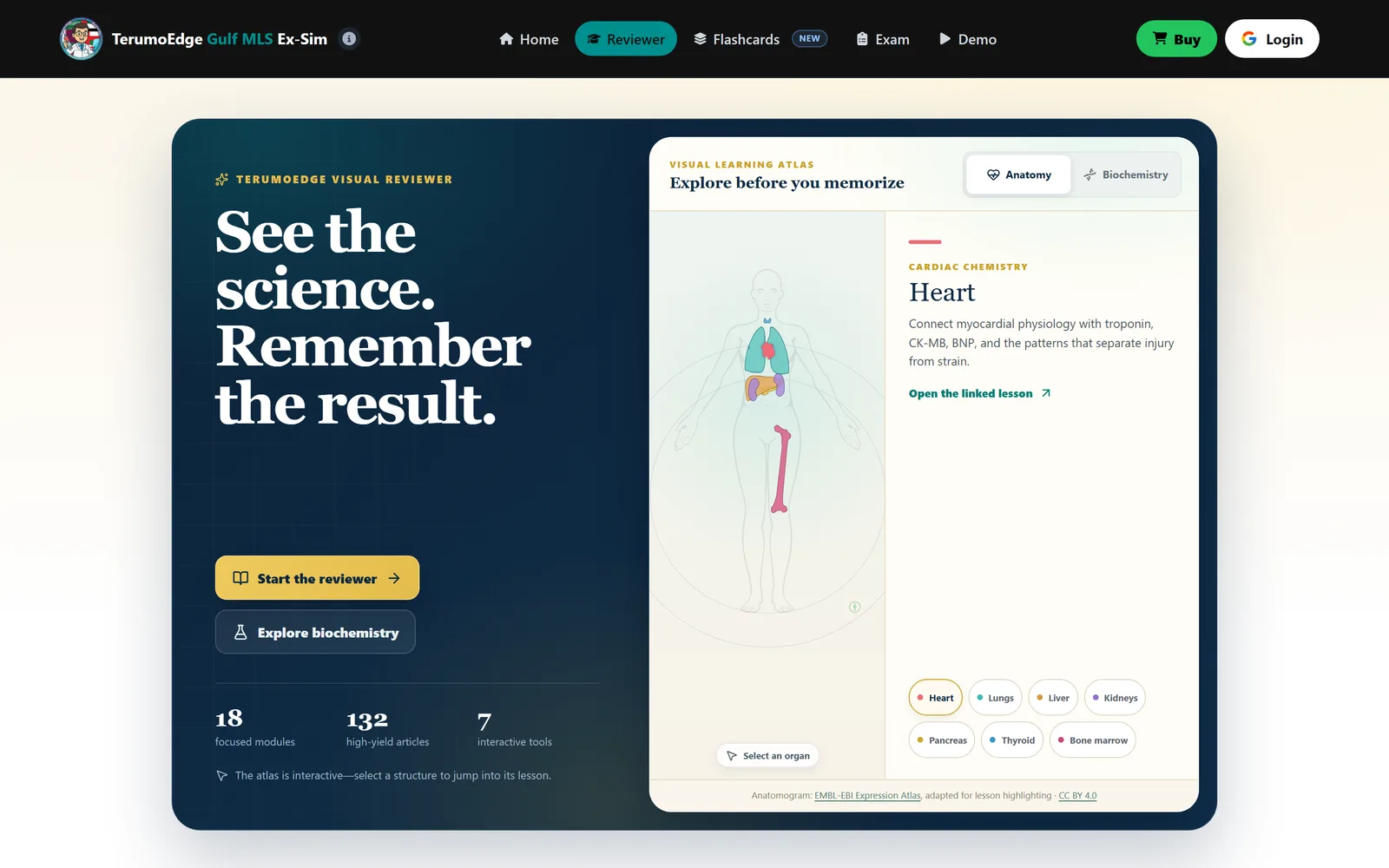
You are a medtech who knows the Gulf is the next step, and you are stuck on how to prepare. A Prometric review center promises structure. Self review promises flexibility. Which one suits you depends less on the format than on one question: which authority's exam are you actually preparing for?
We publish this blog and make the TerumoEdge Gulf MLS Ex-Sim, a simulator, so we have a stake in self-paced practice. We compare categories, not named centers, and we try to be fair to both routes.
Which is better: a review center or self review?
Neither is better in general. A review center suits you if you need a fixed schedule, live teaching and people to study with. Self review suits you if your shifts rotate, your licensing file is still moving, or you already know which disciplines are weak. Many medtechs end up with a hybrid.
What does not change between the two routes is what the exam demands. The Gulf lab exams are timed, computer-based, multiple-choice papers. SCFHS's Laboratory Technician exam is 150 items in 3 hours with a 55% pass mark (SCFHS technician blueprint). DHA and Qatar's DHP also publish 150 items in 3 hours, each with a 50% pass mark. Whatever route you choose, you need to practise that format at that pace.
What does a review center do well?
A review center does three things well: it gives you a calendar, it puts a teacher in front of difficult topics and it surrounds you with a cohort.
A fixed calendar helps if your main enemy is procrastination. You show up, you cover the material in order and you cannot quietly skip the disciplines you dislike. Live teaching helps with topics that are hard to learn from text, such as antibody identification logic or interpreting coagulation patterns. A cohort gives you people to quiz, compare notes with and measure yourself against.
The trade-offs are time and fit. A fixed schedule is hard to hold on a rotating roster, and a course built for a generic "Prometric" exam may spend hours on content outside your authority's blueprint. That leads to the question that matters most.
One more point for review centers: a good one makes you answer questions out loud and in company, which exposes gaps that silent reading hides. If you choose this route, ask whether the sessions include timed papers and a review of the answers, not only lectures. Lectures build understanding, but the exam rewards retrieval, and retrieval needs practice items.
What does self review do well?
Self review does two things well: it bends around your life and it lets you spend time where your gaps are.
Hospital laboratory staff rarely have the same hours two weeks running. Self review lets you study for 20 minutes after a night shift or 90 minutes on a day off without missing a session. It also lets you skip what you already know. If you run chemistry daily but have not touched blood bank since school, you can spend your hours accordingly.
The costs are discipline and feedback. Nobody notices if you drift. You also have to find your own materials, judge their quality and decide when you are ready. That is where a lab-science reviewer, flashcards and a timed question bank help: they supply structure and feedback without a classroom.
Which blueprint does the course or resource teach to?
Ask this of every option, paid or free: which authority's published blueprint does it teach to? The authorities do not share one syllabus.
| Authority and exam | Published structure |
|---|---|
| SCFHS Laboratory Technician | 150 MCQs, 3 hours, 55%. Microbiology, Chemistry, Hematology, Blood Bank 20% each, Immunology/Serology 15%, Histo/Cyto 5% |
| SCFHS Laboratory Specialist (SLLE) | 200 MCQs, two 120-minute parts, 530 on a 200 to 800 scale, nine sections with ranges |
| DHA Technician and Technologist | 150 questions, 3 hours including registration, 50%, different coverage lists per paper |
| Qatar DHP | 150 MCQs, 3 hours, 50% cut score |
Figures are as published in the SCFHS technician blueprint, the SLLE guideline, the DHA CBT guideline and the DHP page, and each authority says they may change.
A course that says "Prometric" without naming an authority is teaching an average that matches nobody. A good answer names the authority, the title and the document it follows.
When you speak to a provider, bring a short list. Which authority and which title does the course prepare for? Which published document does it follow, and when was it last checked? How many timed sessions at exam pace are included? Do the explanations cover every option? You are not interrogating anyone; you are making sure the course fits your paper. A provider that answers clearly, and admits what it does not cover, is a good sign.
The same questions apply to self review. If you assemble your own materials, write down the authority, the title and the blueprint at the top of your plan, and check every resource against it. A free compilation that targets another exam wastes your hours without feeling wasteful, because it still looks like studying.
Who should choose a Prometric review center, and who should self review?
Choose a review center if you have a fixed schedule, you learn best from a live teacher and you want accountability. Choose self review if your roster rotates, your authority is not settled or you need to focus on a few weak disciplines. Choose a hybrid if you want both.
| Factor | Review center | Self review | Hybrid |
|---|---|---|---|
| Schedule | Fixed by the provider | Yours | Live sessions fixed, practice flexible |
| Time cost | Travel or set online hours | Only the study time | Set sessions plus flexible practice |
| Blueprint fit | Depends on the course; ask | Yours to choose | Ask the live part; set the rest yourself |
| Timed practice | Varies; ask for 150-item sessions | Needs a timed question bank | Live teaching, simulator for timing |
| Flexibility | Low | High | Medium |
No source we found says an authority requires a review course. Check your authority's rules rather than assuming either way.
Some situations point clearly one way. If you left school years ago and need to rebuild whole disciplines, live teaching and a fixed calendar often help. If you work nights, have limited travel time or are still waiting on your licensing file, flexible self-paced study protects you from paying for hours you cannot attend. If you are unsure, start self-paced for two weeks with a timed demo and a reviewer, and see how far discipline alone takes you before adding a fixed commitment.
How do you build a hybrid around a lab roster?
Use live teaching for the topics you cannot learn alone, and use self-paced tools for everything that needs repetition. The roster decides the rest.
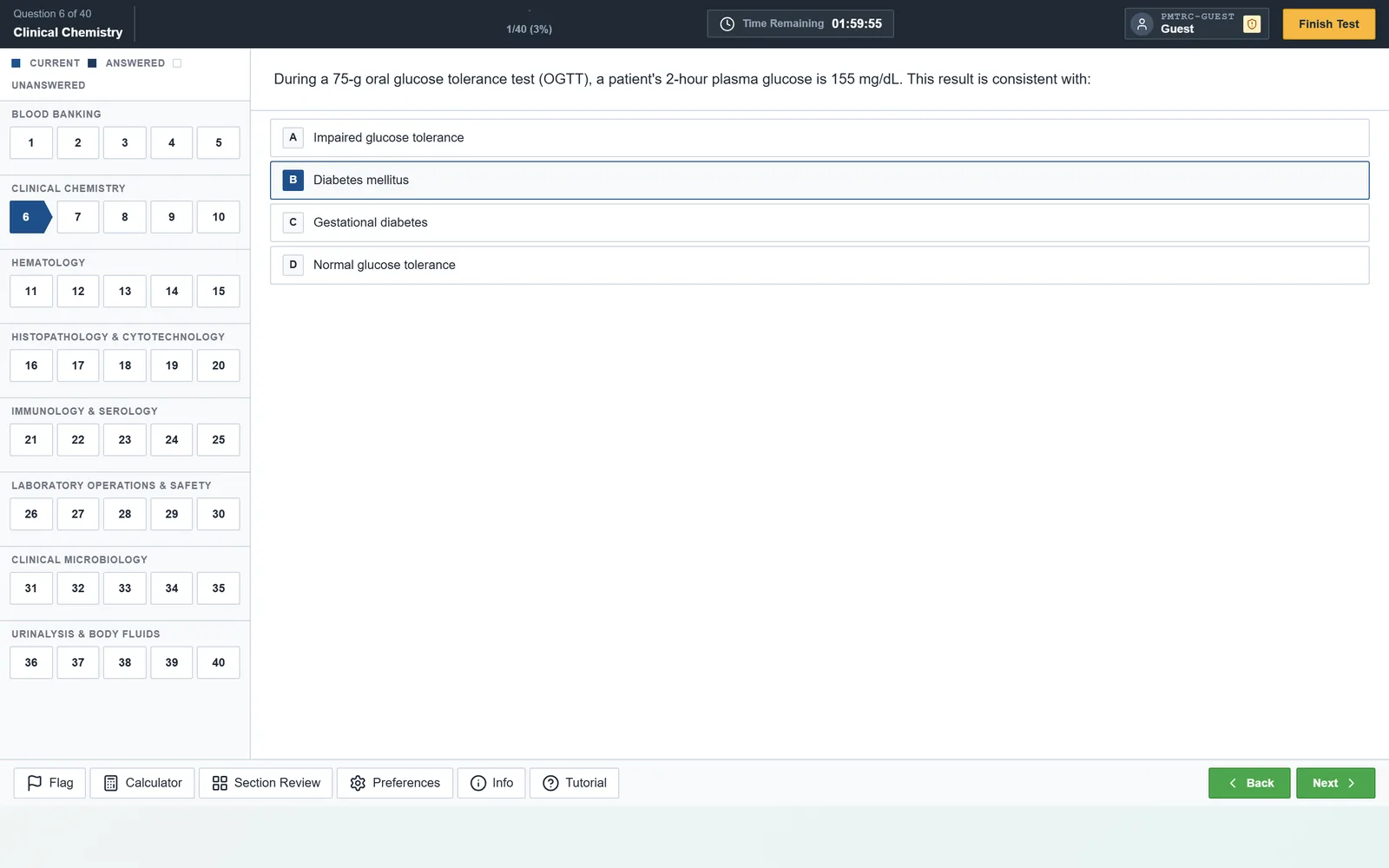
On duty days, use short sessions: a flashcard deck, a handful of questions from one discipline. On days off, do one long block, ideally a full timed mock. In the last month, move to timed sessions at exam pace. If your paper is 150 items in 3 hours, that is 72 seconds an item, and the simulator guide shows how to set the clock to train it. For a week-by-week structure around shifts, see reviewing for the Prometric exam while working.
Frequently asked questions
Can you pass the Prometric exam through self review?
We have no statistics on who passes by which route, and no authority publishes pass rates. What we can say is what self review requires: your authority's blueprint, a way to cover every discipline, timed practice at your paper's pace and explanations that teach from mistakes. Self-reviewers who skip timed practice usually find pace is the problem.
Does any authority require a review course?
No source we checked says so. The SCFHS, DHA and Qatar DHP documents we read describe the exam, the booking steps and the scoring, not a required course. Rules can differ for each authority and title, so confirm yours with the authority directly.
How long should a Prometric review take?
There is no fixed answer, and we will not invent one. It depends on how recently you worked each discipline, your authority's blueprint and your roster. Our first-time guide gives the order of moves, and any plan you adopt is a structure to adapt, not a promise.
Sources
- Laboratory Technician Blueprint (Saudi Licensing Examinations) — SCFHS
- Saudi Laboratory Specialist Licensure Examination (SLLE) Content Guideline — SCFHS
- DHA Healthcare Professional Licensing Assessment Guideline, Computer Based Testing — Dubai Health Authority
- Qualifying Examination — Department of Healthcare Professions, Qatar
From the publisher
Practise the lab disciplines first.
TerumoEdge Gulf MLS is a practice simulator for the Gulf laboratory licensing exams: timed sessions in eight lab disciplines, an adjustable clock, and a full explanation for every item instead of a bare answer key.
- 4,000 items, 500 in each of eight lab disciplines
- A 100-item blended mock, reshuffled each attempt
- A full English explanation for every item, with the reason each wrong option is wrong
- A lab science reviewer and flashcards beside the question bank
Try the free Gulf MLS simulator demo Forty items across all eight lab disciplines. No account needed.
About this article
Written by the TerumoEdge editorial team, who build the TerumoEdge Gulf MLS Ex-Sim. Exam facts are checked against the published documents of SCFHS, the Dubai Health Authority, Qatar's Department of Healthcare Professions and NHRA Bahrain, and every article lists its sources. How we write and check our articles.
First published .