
Your situation6-minute readFor working medtechs on hospital shifts
How to review for the Prometric exam while working a rotating lab roster
How to review for the Prometric exam while working: a weekly plan for morning, afternoon and night shifts, phone drills and a day-off timed rehearsal.
You are on the bench five or six days a week, your shift changes every fortnight, and the licence exam still needs real preparation. To review for the Prometric exam while working, you need a plan that survives a rotating roster, not a plan that assumes free evenings.
This post is about the schedule: when to study, what to do in each kind of gap, and how to protect your final two weeks. It does not cover filling skill gaps from a different bench. For that, see our guide for medtechs moving into a reference lab.
Why is it a time problem, not a talent problem?
For a working medtech, the limit is usable hours, not ability. You already run assays and handle QC every shift. What you lack is a protected block to rehearse a 150-item paper under a clock.
Start by counting honestly. Take your next four weeks of roster and mark every day off, every post-night recovery day and every shift that finishes before late afternoon. Then estimate the hours you could spend on study without wrecking sleep. Most people find fewer than they hoped and more than they feared, and the real number becomes your budget.
Next, fix the target. The SCFHS Laboratory Technician exam is published as 150 MCQs in 3 hours at a 55% passing score, and DHA and Qatar's DHP each publish 150 questions in 3 hours at 50%. Those are the SCFHS blueprint, the DHA guideline and the DHP page, as published. Pick your authority first, then spend your hours on its blueprint.
What does a week look like on a rotating roster?
A workable week has one full timed paper on a day off, three or four short phone sessions on duty days, and one rest day with no study. The table shows a sample week, which you should adapt to your own roster.
| Day type | Study | Length | Notes |
|---|---|---|---|
| Morning shift | Phone drills or flashcards in the evening | 20–30 min | Do it before you are tired |
| Afternoon shift | A fixed discipline set before the shift | 45–60 min | Fresh mornings are your best hours |
| Night shift | Recall only, in a break | 10 min | Keep the heavy work for rested days |
| Post-night day | Sleep first; light recall late in the day | 0–20 min | Do not schedule a paper |
| Day off | One full timed paper, then review | 3–4 hours | The week's main session |
| Rest day | None | 0 | Protects sleep and recall |
If your roster has two days off in a row, put the paper on the first one and the review on the second. The review is where most of the learning happens, so do not skip it to save time.
How do you use short pockets well?
Use short pockets for recall and single-discipline drills, not for learning new material from scratch. A 10-minute gap is enough to answer 8 to 10 items or to clear a stack of flashcards.
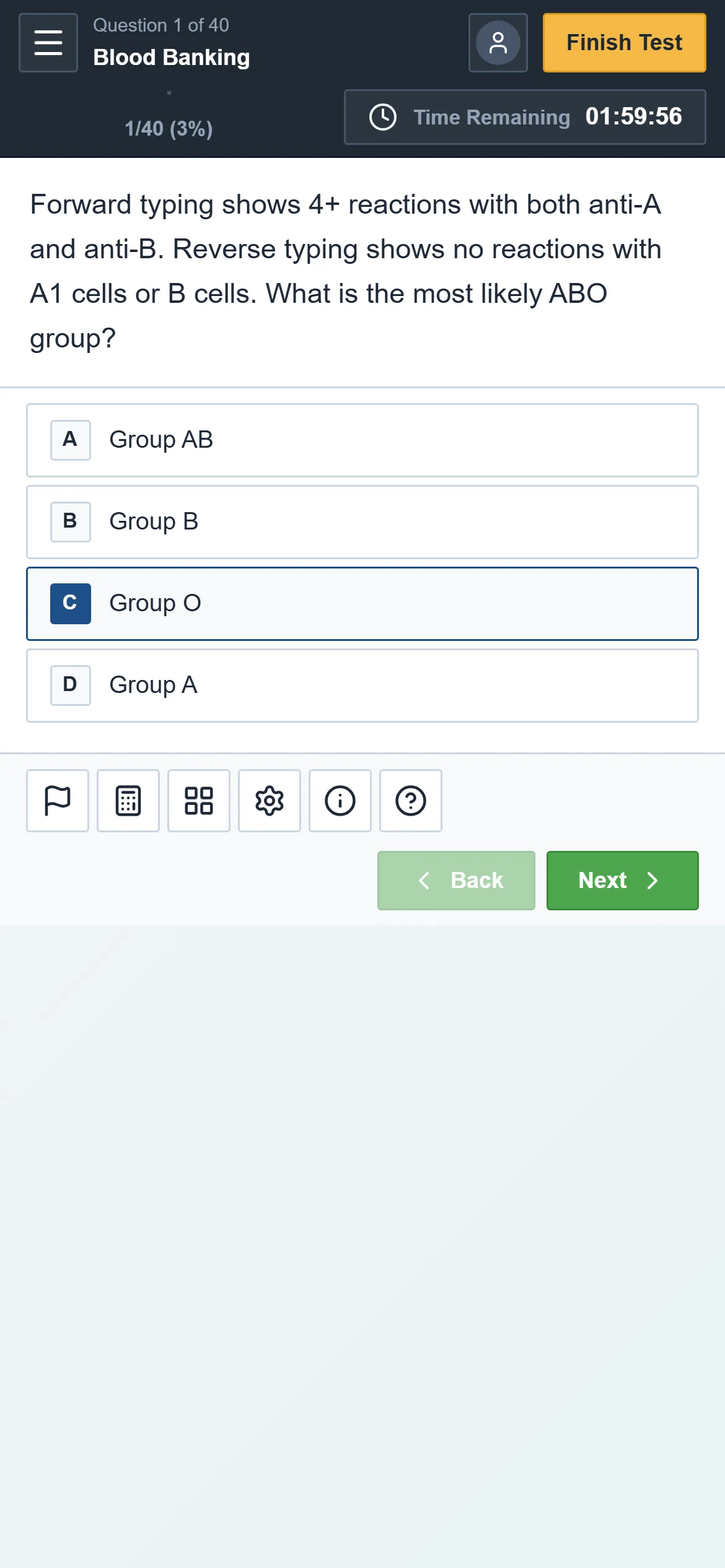
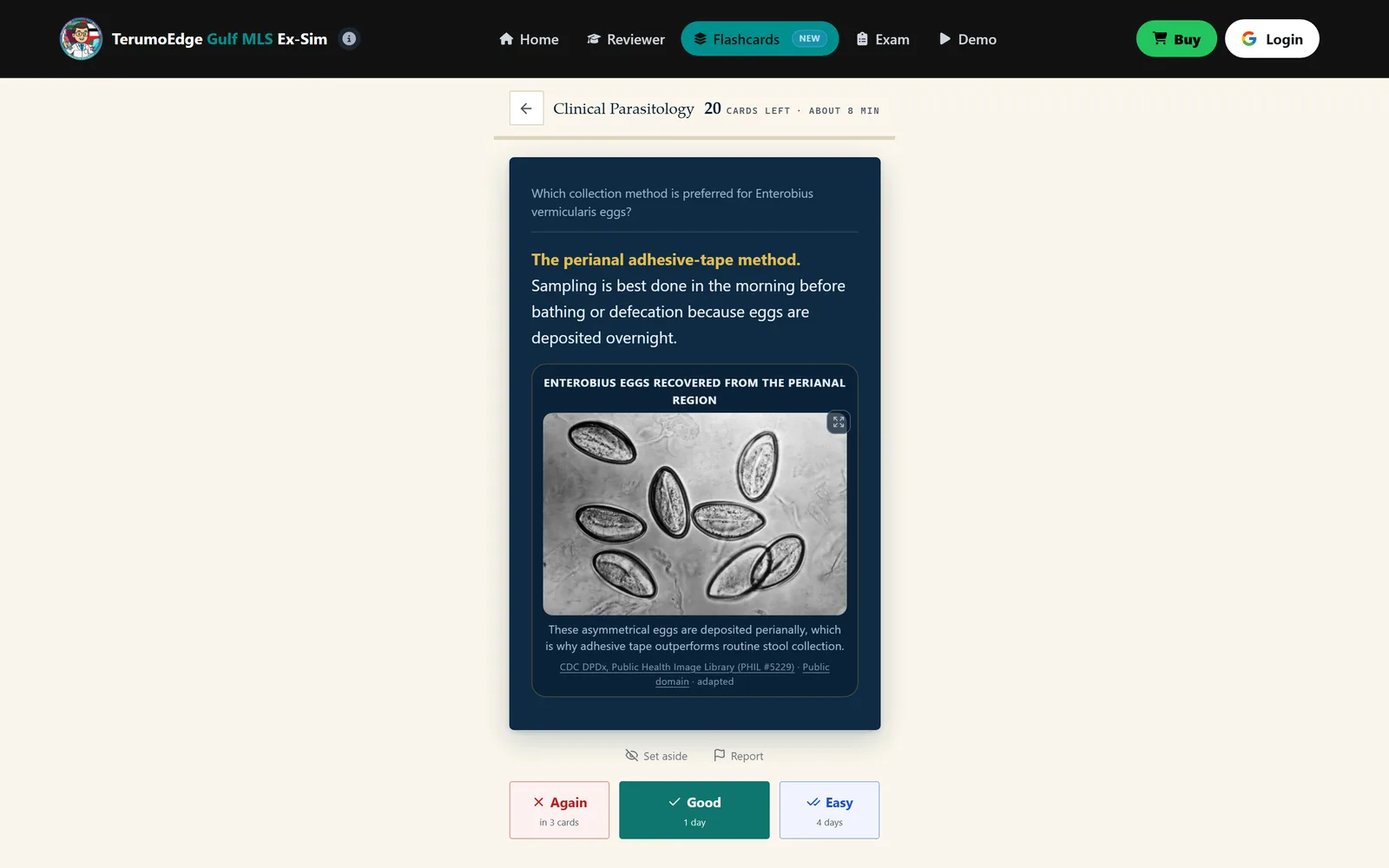
The simulator is built to work on a phone between shifts, and the demo's phone view shows the same exam room at portrait width. Its discipline practice has four fixed sets of 100 items per discipline, plus a random pool drawn from all 500 items in that discipline. The flashcards hold 1,000 cards in 25 decks, and they suit break-room recall well.
Keep a note on your phone for lines you want to revisit, such as a unit you confused or a rule you mixed up. Review that note on your next quiet break, because short repeated looks beat one long session. After each drill, read the explanation for what you missed. Each explanation names the correct answer, gives the rationale and says why each other option is wrong. That takes a few minutes and is worth more than racing to the next item.
Which disciplines get your limited hours?
Give your limited hours to the disciplines with the most weight in your authority's blueprint, then to your weakest results. Comfort is a poor guide, because it points you at the bench you work every day.
For the SCFHS technician paper, as published, Microbiology, Clinical Chemistry, Hematology and Blood Bank are 20% each, Immunology/Serology is 15% and Histo/Cyto-Techniques is 5%. SCFHS says the weights may differ by up to 5% in each category and are subject to change. The SLLE publishes ranges instead: 15 to 20% for the four major disciplines and 5 to 10% for the rest. DHA lists topics without weights, so cover every listed area and let your results steer.
A simple split for a mixed week is half your hours on the two weakest weighted disciplines, a third on the other major ones, and the rest on the small blocks. Our study plan turns this into eight weeks.
How does the day-off rehearsal fit when you review for the Prometric exam while working?
The day-off rehearsal is one full, uninterrupted paper at exam pace, followed by a long review. It is the single session that trains the thing the exam measures: accuracy under a clock.
Set the 100-item mock to 120 minutes to train 72 seconds an item, which is the pace of a 150-item, 3-hour paper. The mock is our blend of the disciplines, not any authority's own paper, so read it by discipline. The default of 150 minutes is an editable timer and matches no authority, so change it.
Sit it at the hour you will sit the real exam, with your phone away. Afterwards, list every miss by cause: gap, misread, unit or time. Then plan next week's drills from that list. If you want a first look at the interface, the free demo has 40 items and is unscored.
When should you take leave, and what happens in the final fortnight?
Book leave for at least the last week, and ideally the last fortnight, as early as your roster allows. Leave protects sleep, lets you run two full papers at the real time of day, and gives you slack for paperwork.
In the final fortnight, shift your body clock toward your booked time, run two full papers, and use short sessions for the small blocks. Our last-month guide lays out the weeks. Check your booking terms for rescheduling, as the sources we use do not state any rules for that.
Protect your health in this stretch. Sleep debt from night duty undoes a week of good drills, so if you must choose between an extra hour of study and an hour of sleep before a rest day, choose sleep. Be honest with yourself about the limits. A rotating roster, night duty and travel can make a clean preparation hard, and you may need to choose a later date. Under DHA's rules you get three attempts in total, and Qatar's DHP allows five consecutive attempts, as published. Sitting prepared costs less time than sitting twice.
Frequently asked questions
Can I pass while working full time?
We cannot promise it, and no authority we found publishes pass rates. What the sources do show is a defined format, such as 150 items in 3 hours. A steady weekly rhythm, one timed paper a week and explanation review gives you a realistic chance to prepare while employed.
How many hours a week should I study?
There is no sourced figure. Count the hours your roster realistically allows, protect sleep, and aim for a rhythm you can hold for weeks. A fixed weekly paper plus four short sessions is a workable pattern for many people on shifts.
Is it worth reviewing on night duty?
Light recall in a break, yes. Heavy study during or just after a night shift is poor value, because tired recall is shaky. Keep new material and full papers for rested days, and let night shifts carry flashcards or a short set at most.
Do I need a review center if I work?
No source says any authority requires one. Whether a review center, self review or a mix suits you depends on your roster. We compare them in our review center versus self review post.
Sources
- Laboratory Technician Blueprint, Saudi Licensing Examinations — SCFHS
- Saudi Laboratory Specialist Licensure Examination (SLLE) Content Guideline — SCFHS
- Healthcare Professional Licensing Assessment Guideline, Computer Based Testing — Dubai Health Authority
- Qualifying Examination — Department of Healthcare Professions, Qatar
From the publisher
Practise the lab disciplines first.
TerumoEdge Gulf MLS is a practice simulator for the Gulf laboratory licensing exams: timed sessions in eight lab disciplines, an adjustable clock, and a full explanation for every item instead of a bare answer key.
- 4,000 items, 500 in each of eight lab disciplines
- A 100-item blended mock, reshuffled each attempt
- A full English explanation for every item, with the reason each wrong option is wrong
- A lab science reviewer and flashcards beside the question bank
Try the free Gulf MLS simulator demo Forty items across all eight lab disciplines. No account needed.
About this article
Written by the TerumoEdge editorial team, who build the TerumoEdge Gulf MLS Ex-Sim. Exam facts are checked against the published documents of SCFHS, the Dubai Health Authority, Qatar's Department of Healthcare Professions and NHRA Bahrain, and every article lists its sources. How we write and check our articles.
First published .